
Injured in an Alabama crash while working: can you bring both claims?
Alabama · Work-related crashes
Injured in an Alabama crash while working: can you bring both claims?
An Alabama crash during covered work travel can lead to both workers’ compensation benefits and an injury claim against a legally responsible outside party. The claims answer different questions: was the injury work-related, and who caused the crash? You generally do not have to choose one, but a settlement with the other party can affect reimbursement and future benefits. Ordinary commuting and claims against coworkers require separate analysis.
In this article
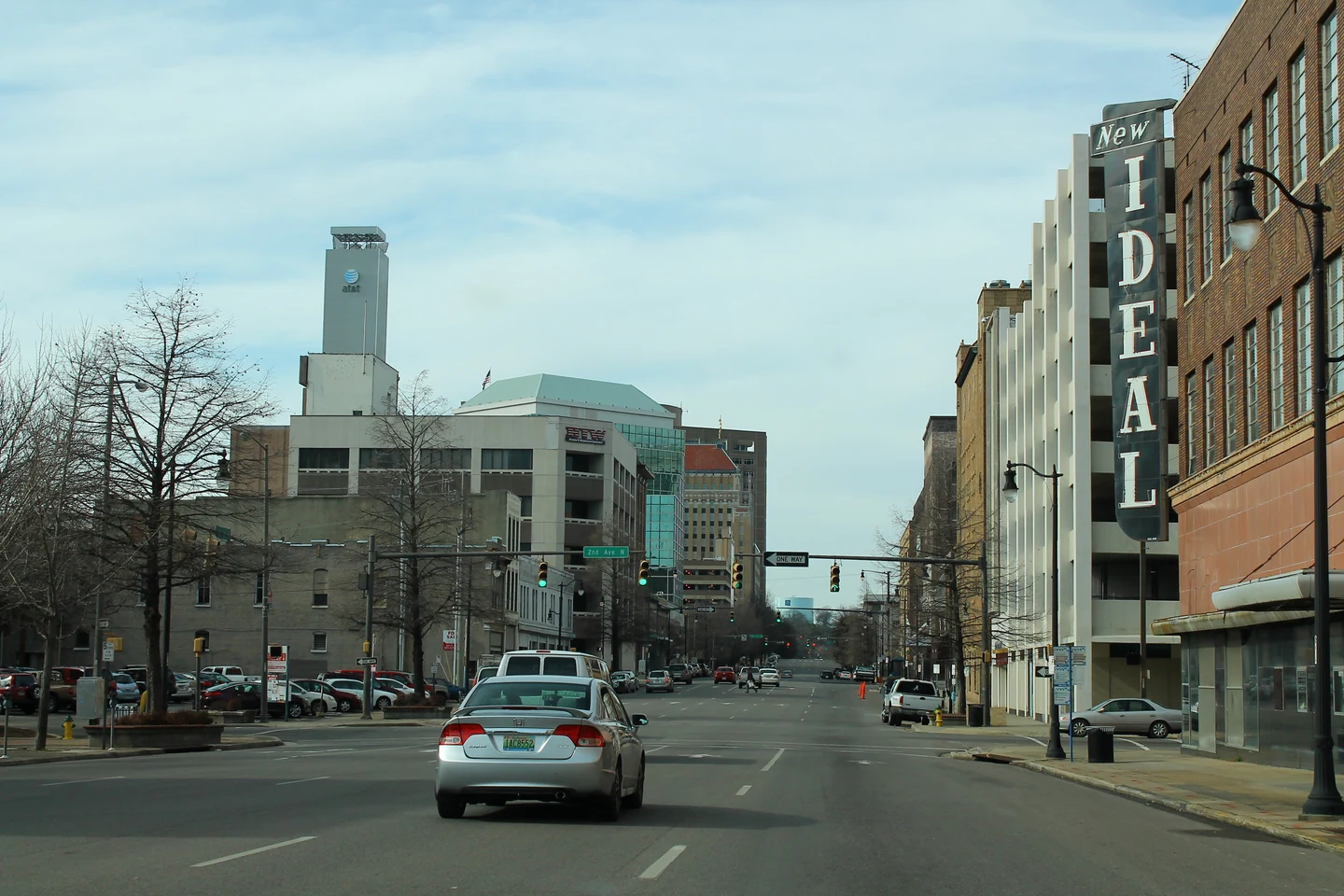
Hypothetical Birmingham example: Your supervisor sends you from one jobsite to another, and a driver from a different company hits your car. The work assignment may support a workers’ compensation inquiry. The other driver’s conduct may support a separate injury claim. Neither follows automatically: the employment, trip and collision facts must be established.
Start with the three questions below. If the crash just happened, seek necessary care and report the injury to your employer promptly; the legal review can continue while those immediate steps are taken.
1. Was the trip part of your job?
Workers’ compensation asks whether the accident arose out of and in the course of employment: was there a sufficient connection between the job and the injury? Alabama’s benefits and claims guide describes the required relationship among the employment, the accident, the time and place, and the employee’s duties.
An ordinary trip from home to a fixed workplace or back generally falls under the going-and-coming rule and is outside compensation coverage. But “heading home” does not resolve every case. Employer-provided transportation, travel reimbursement, a specific employer-directed task, travel between work locations and the duties of a traveling employee may change the analysis.
The actual work arrangement matters more than a label such as “heading home.” In Hospice Family Care v. Allen, the court considered a nurse’s travel, remaining duties and personal stop when deciding whether the trip remained connected to work.
A personal errand can complicate or interrupt the work connection. Its purpose, length, route and relationship to the employer’s business require attention. Neither being on the clock nor using a personal car decides the issue alone. A company vehicle likewise does not make every trip a covered work trip.
Check the employment relationship and coverage
Workers’ compensation does not apply identically to every person earning money on the road. Employee status, the employer’s coverage and statutory exclusions can matter. A contract calling someone an independent contractor is a document to examine, not a substitute for reviewing the actual working relationship.
Alabama generally requires coverage for employers with five or more employees, but exceptions and special rules exist. An employee should not assume there is no coverage solely because the business is small, or assume coverage solely because the company is large. Confirm the employer and carrier rather than relying on a coworker’s experience.
For work crossing between Phenix City and Columbus, preserve where you were hired, where you regularly worked, the employer’s location and the crash location. State coverage and jurisdiction questions can differ from the law governing a claim against the other driver.
2. Was an outside party legally responsible?
Alabama Code § 25-5-11 permits a qualifying employee to pursue workers’ compensation and damages from a responsible third party at the same time. A negligent driver employed by a different business may be that third party. A negligent coworker acting in covered employment presents a different legal problem. The compensation system’s employer and coemployee protections limit ordinary negligence suits; § 25-5-11 allows certain coemployee claims only under its defined willful-conduct rules.
Swipe or scroll horizontally to read the full table.
| Question | Workers’ compensation | Third-party injury claim |
|---|---|---|
| What must be established? | Covered employment, a qualifying work-related injury and compliance with applicable requirements; employer negligence is not generally required. | A legally responsible third party, injury causation and recoverable damages, subject to applicable defenses. |
| What can it address? | Authorized medical care and statutory wage/disability benefits, as applicable. | Recoverable injury damages, potentially including losses beyond statutory compensation benefits. |
| How do payments interact? | The employer/carrier may have reimbursement, subrogation or future-credit rights. | A gross recovery must be evaluated with those rights and other lawful deductions in view. |
A compensation payment does not prove that another driver caused the collision. A police report blaming another driver does not, by itself, establish work coverage.
When uninsured or underinsured motorist coverage is involved
The same distinction can affect UM/UIM coverage. In Ex parte Carlton, a worker could not recover UM benefits based on an immune coemployee’s ordinary negligence because he was not legally entitled to recover from that driver. That does not mean receiving workers’ compensation always defeats UM coverage.
In Johnson v. Coregis Insurance Co., the Alabama Supreme Court rejected the idea that compensation benefits alone necessarily bar an underinsured motorist claim involving a different driver. Policy terms, the responsible driver’s legal liability and applicable coordination rules still need review. Do not treat UM money as automatically free of all benefit or policy issues.
Work-related crashes · Alabama
One crash can require two coordinated claim reviews
Workers’ compensation
Was the injury work-related and covered?
Review the purpose of the trip, employment circumstances, reporting, authorized treatment and benefit eligibility.
Useful records: employer instructions, route, time records and benefit notices.
Third-party injury claim
Did a legally responsible outside party cause harm?
Investigate fault, damages and liability coverage separately from the benefits claim.
Useful records: crash evidence, witnesses, vehicle records and insurance correspondence.
Coordinate before settlement. Reimbursement, credits and medical-benefit subrogation may affect how the two claims interact. Two claims do not mean two payments for the same loss.
Explanatory paths, not a conclusion that either claim qualifies. Ordinary commuting, employer/coemployee claims, special travel facts and applicable law require separate analysis.
Source basis: Alabama Code § 25-5-11 · Alabama benefits and claims filing guide
3. How could a settlement affect your benefits?
A settlement offer is not necessarily the amount you will keep. Section 25-5-11 provides for repayment of compensation already paid and credits that can reduce future compensation liability when damages are recovered from a third party. It separately addresses subrogation for medical and vocational benefits: rights to recover those expenses from the responsible party’s payment.
Medical expenses, wage/disability payments and future benefits should be identified separately. The allocation of a recovery and its effect on future care need legal review; simply labeling an entire settlement “pain and suffering” does not establish that reimbursement rights disappear.
The employer also has a statutory obligation under § 25-5-11(e) to bear a proportionate share of attorney’s fees in a qualifying third-party settlement, based on the reduction in its compensation liability. That fee contribution must be calculated under the statute; it is not an automatic cancellation of the claimed reimbursement. Obtain an itemized payment history, review the asserted rights and resolve the applicable fee contribution and any disputed allocation before distribution.
Ask for a written explanation of how a proposed settlement affects money already paid, continuing checks and future medical care. A settlement that looks sufficient today may be less useful if its effect on tomorrow’s benefits has not been understood.
Report the injury and clarify treatment authorization
Address emergency care first. Report the crash and injury to your employer promptly, preferably in writing, and keep a copy. Include when and where it happened, the work task, who directed the trip and the injuries known at the time. An auto-insurance report does not necessarily give the employer the notice required for workers’ compensation.
The state’s claims guide identifies a five-day notice requirement and a 90-day outer notice period, while recognizing that actual employer knowledge can satisfy statutory notice. Exceptions and the effect of delayed notice require case-specific review. Treat these as reasons to report promptly, not as a reason to wait.
For nonemergency treatment, ask who the authorized treating provider is. The Alabama workers’ compensation medical guidance explains that the employer or carrier generally directs care. Keep treatment authorizations, referrals, work restrictions, mileage records and benefit-payment statements. An authorization dispute should be addressed directly rather than assuming every provider you choose will be paid through compensation.
Preserve work records alongside crash evidence
- Trip purpose: dispatch records, delivery orders, calendars, client appointments and supervisor instructions.
- Route and timing: original location records, mileage submissions, time entries and receipts showing any stop.
- Employment: job duties, work agreements, payroll records and the employer’s injury report.
- Crash and injury: photographs, recordings, witness contacts, medical records and work restrictions.
- Payments and claims: carrier contacts, authorizations, compensation statements, medical payments and every settlement offer.
The state guide generally describes a two-year period to file a compensation action from the accident, or from the last compensation payment when qualifying payments have been made. It expressly distinguishes those payments from medical treatment payments. The third-party case has its own deadlines. Reporting an injury, negotiating with an adjuster and filing the necessary court action are different steps; have the dates checked while the records are still available.
Bring both claims into the same conversation
Bodewell’s Birmingham workers’ compensation practice addresses treatment, wage and disability-benefit disputes, including injuries from driving for work. A crash involving another driver also calls for a separate review of fault, damages and insurance.
Talk with Bodewell about your work-related crash. Bring the employer report, carrier letters, benefit history and proposed release if you have them. You do not need a complete file to begin checking how the claims fit together.
Sources and further reading
- Alabama Code § 25-5-11
- Hospice Family Care v. Allen, No. 2140861 (Ala. Civ. App. June 10, 2016)
- Alabama benefits and claims filing guide
- Alabama workers’ compensation FAQ
- Ex parte Carlton, 867 So. 2d 332 (Ala. 2003)
- Johnson v. Coregis Insurance Co., 888 So. 2d 1231 (Ala. 2004)
- Bodewell contact page
- Bodewell Birmingham workers’ compensation practice
Downtown Birmingham, 2014 · formulanone via Wikimedia Commons · CC BY-SA 2.0. Full frame, resized and converted to WebP.
.jpg)
General information only: This page is not legal advice and does not create an attorney-client relationship. Deadlines, damages, defendants, and state-law rules depend on the facts. Read our full disclaimer before sending information.
No representation is made that the quality of legal services to be performed is greater than the quality of legal services performed by other lawyers.