
Injured as an Alabama passenger: whose insurance may apply?
Alabama · Passenger injuries
Injured as an Alabama passenger: whose insurance may apply?
An injured Alabama passenger should examine three paths: a claim against another responsible driver, a claim against the driver transporting them, and benefits under policies that may insure them. A claim against your own driver has an added question: if you were a guest riding without payment, Alabama’s guest statute generally requires willful or wanton misconduct. That rule does not automatically bar a negligence claim against a different driver, and insurance does not automatically bypass it.
In this article
Start by separating the drivers
If another vehicle’s driver negligently caused your injuries, an injury claim may be available against that driver. If the person driving your car caused or contributed to the crash, the purpose and terms of your ride also matter. Lawyers may call the person transporting you the host driver.
Both drivers’ conduct may need investigation. Preserve what you saw and heard rather than choosing between their accounts. Being a passenger does not automatically establish a claim against everyone involved or require each insurer to pay its full limit.
Ordinary-car passengers · Alabama
Start with the passenger. Then separate the questions.
The driver’s identity, purpose of the ride and available policies all matter.
Another driver
Investigate whether that driver caused the crash and what liability coverage may apply.
Driver of your car
Determine whether Alabama’s guest statute applies and whether the evidence meets the governing liability standard.
Policies that may insure you
Check applicable UM/UIM and medical-payments provisions. Insured status and legal entitlement remain separate questions.
Do not skip the guest question. A free ride does not make every passenger situation legally identical. Payments, benefits and the circumstances need review.
These are potential paths to investigate, not a finding that any driver or insurer must pay. This graphic addresses ordinary-car passengers, not a rideshare coverage analysis.
Source basis: Alabama Code § 32-1-2 · Cash v. Caldwell, 603 So. 2d 1001 (Ala. 1992) · Alabama Code § 32-7-23
What was the arrangement for the ride?
A ride with a friend, a gas contribution and a trip requested for the driver’s benefit raise different questions. These examples identify facts to investigate; none decides a claim on its own.
Swipe or scroll horizontally to read the full table.
| Ride facts | Why they matter |
|---|---|
| A friend offers a free ride to dinner | Hospitality points toward guest status for a claim against the host driver. |
| The rider occasionally contributes gas money | The contribution’s purpose and the parties’ arrangement matter; payment is not established by the transfer alone. |
| The driver requested the rider’s help with a specific task | A material benefit or service to the driver may change the guest analysis. |
| A separate vehicle strikes the car | The guest statute does not automatically prevent a negligence claim against that separate driver. |
A social ride usually points toward guest status when the driver’s benefit is ordinary hospitality or goodwill. A mutual business purpose or a material service to the driver may lead to a different analysis. Cash v. Caldwell explains why the purpose and benefit of the trip matter and why disputed classification can be a jury question.
Gas money needs the same context. A genuine transportation arrangement conditioned on expense sharing differs from an occasional courtesy contribution during a social ride. Klaber v. Elliott shows why contributing gas money does not automatically make someone a paying passenger.
Save the original messages arranging the trip, payment records, the destination and any recurring agreement. Record who requested the ride and why. Describe the actual arrangement rather than choosing a legal label after the crash.
What Alabama’s guest statute changes
Alabama Code § 32-1-2 limits liability for injuries to a guest transported without payment. When it applies, the host driver’s ordinary negligence is not enough; the injury must result from willful or wanton misconduct by the person covered by the statute.
This is a higher legal threshold than showing that someone made a careless driving mistake. A traffic citation, a frightening crash or a serious injury does not by itself establish willfulness or wantonness. The driver’s conduct, awareness and surrounding circumstances need evidence.
The statute does not make every passenger a guest. Nor does it grant a different driver immunity merely because you were riding for free in someone else’s car. Ask which person the proposed claim concerns before applying the rule.
Which insurance should be reviewed?
Insurance covering a driver’s legal responsibility differs from benefits under a policy that insures you. The latter are often called first-party benefits; eligibility depends on the coverage and who qualifies as an insured. An insurance card alone does not resolve either question. The Alabama insurance department’s auto coverage guide explains the basic coverage categories.
- Another responsible driver’s liability policy: investigate fault, coverage and available injury limits.
- The liability policy on the car you rode in: assess the claim against its driver, including guest status and the applicable legal threshold.
- UM/UIM policies: review the occupied vehicle’s policy and any personal or household policy that may insure you.
- Medical payments coverage: if purchased and applicable, it may help with covered medical expenses without resolving the driver’s fault. Limits, exclusions and coordination provisions still apply.
- Health coverage: ask providers and the health plan how to handle treatment while the injury claim remains pending, including any reimbursement requirements.
A passenger does not have to own a car for the occupied vehicle’s coverage to be relevant. Equally, being inside an insured car does not make every type of coverage available for every claim.
UM does not automatically bypass the guest statute
It can be tempting to think that if the host driver cannot be sued for ordinary negligence, your own uninsured motorist policy must take over. Alabama law does not create that general shortcut.
Alabama’s UM statute protects insured people who are legally entitled to recover damages from the responsible uninsured motorist. Ex parte Carlton enforced that requirement and overruled inconsistent earlier exceptions, including the guest-statute exception. You need a legal basis to recover from the responsible driver; the existence of a UM policy does not supply that basis by itself.
That makes the liability analysis part of the coverage analysis. A claim based on another driver’s negligence may stand differently from one based only on the host driver’s negligence. A claim supported by willful or wanton misconduct needs its own review. The actual UM endorsement and any vehicle exclusions also matter.
Protect your account and your medical record
Seek appropriate medical care, and tell the treating provider what happened and what symptoms you are experiencing. Keep follow-up recommendations, work restrictions, bills and records of missed work. Preserve original photographs and recordings rather than only compressed messages or screenshots.
Keep your account independent. A friend or relative driving the car may have a different legal interest from yours, even when you both want to explain what happened accurately. Separate what you personally remember from what a driver later told you, and have a proposed statement reviewed before signing it. If several injured people seek a share of one policy’s per-accident limit, competing claims can create additional conflicts.
Give timely notice to potentially applicable insurers. Have deadlines and proposed releases reviewed before waiting on another claimant’s case or accepting a payment. A release meant to resolve one claim can have consequences for other coverage.
Bring your own account and the trip details
If you were injured as a passenger in Birmingham, Phenix City or elsewhere in Alabama, contact Bodewell to discuss your account, the ride arrangement and the available policies. Explain whether your concern involves another driver, the driver transporting you or both. An independent review starts with your interests and the facts of your ride.
The crash report, insurer letters and original trip messages are useful starting documents. Bring what you have; you do not need to settle the drivers’ disagreement or determine your legal status before making contact. Friendship, family ties and a gas payment alone do not answer whose insurance may apply.
Sources and further reading
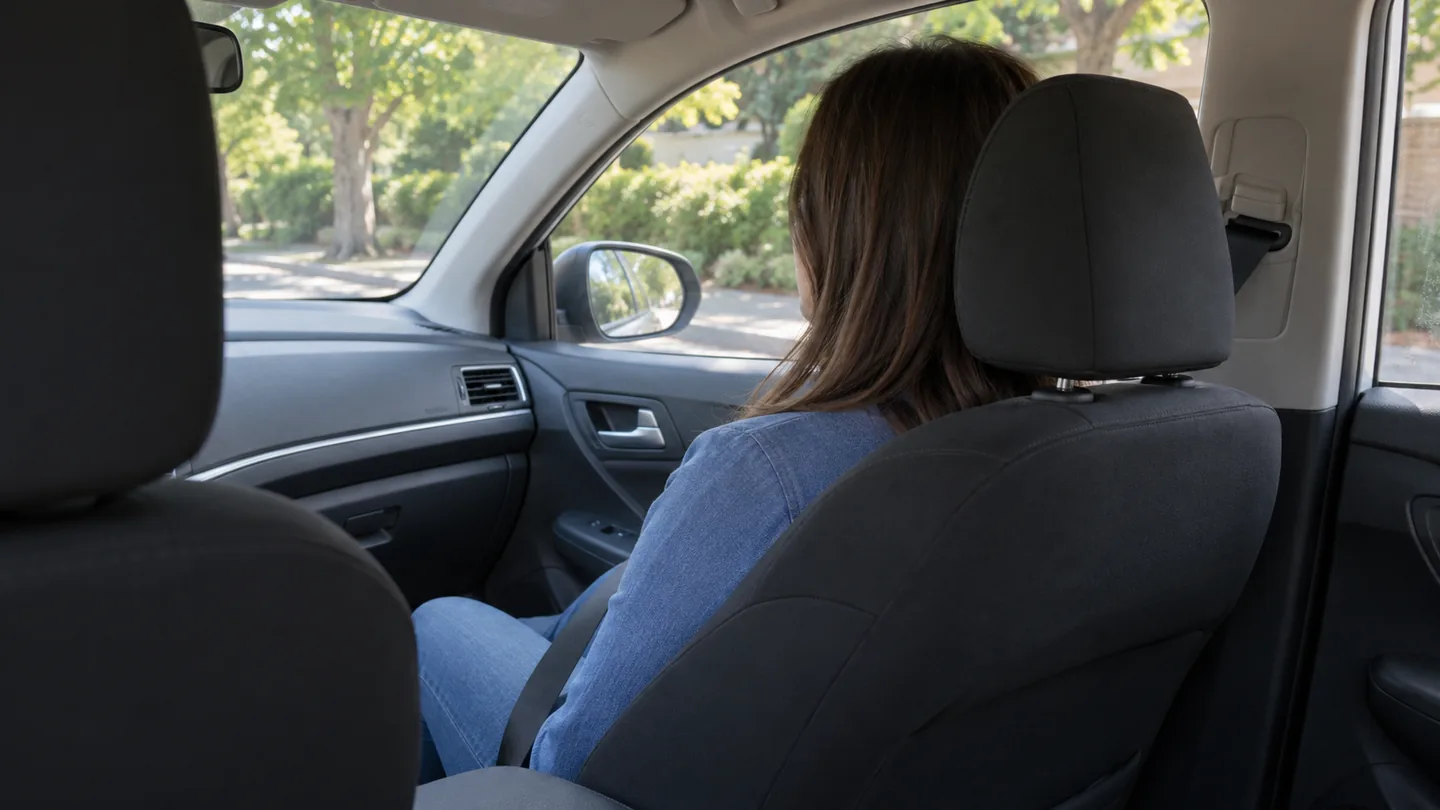
Opening image: AI-generated illustration of a generic scene, not a Bodewell client, actual case or identified location.
General information only: This page is not legal advice and does not create an attorney-client relationship. Deadlines, damages, defendants, and state-law rules depend on the facts. Read our full disclaimer before sending information.
No representation is made that the quality of legal services to be performed is greater than the quality of legal services performed by other lawyers.