
Can an Alabama teen drive friends home after a school football game?
Can an Alabama teen drive friends home after a school football game?
Sometimes, but a school event does not create a general late-night group-ride exception. For an Alabama Stage II driver, a trip to or from a school-sponsored event is an exception to the midnight-to-6 a.m. restriction. A separate rule still limits the driver to no more than one counted passenger. Current Alabama Code § 32-6-7.2
The current Code excludes the driver’s parents, legal guardians, accompanying family members and one accompanying licensed driver age 21 or older from the passenger count. Everyone else must be counted. A ride that fits the nighttime exception can still violate the passenger rule.
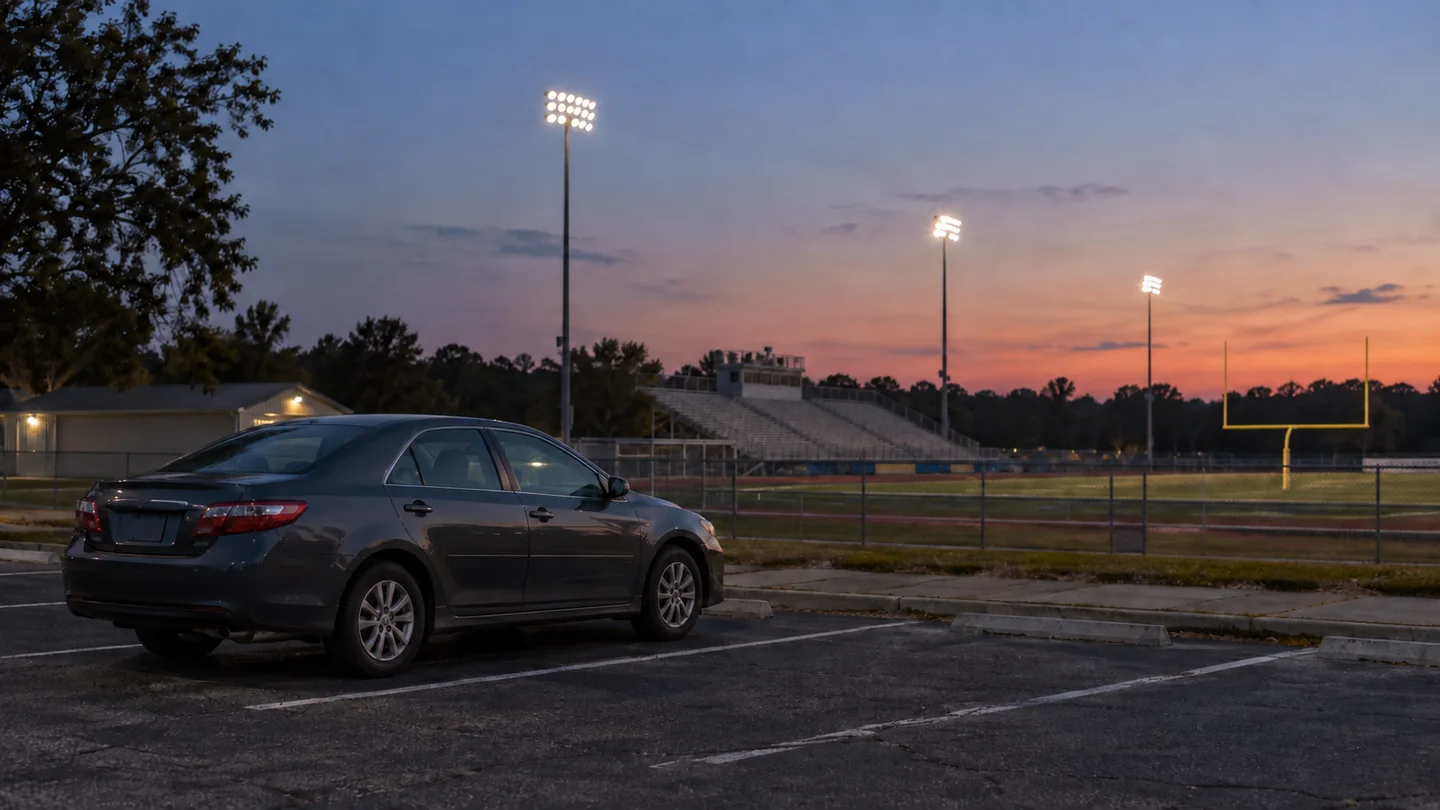
Test one: Is the driver covered by Stage II restrictions?
Under the current Code, a 16-year-old with a regular driver’s license is treated as a Stage II driver. So is a 17-year-old who has been licensed for less than six months.
The section does not apply to a resident who is 18 or older, who is at least 16 and married or the head of a household, or who has otherwise been legally relieved of minority. A 17-year-old license becomes Stage III after six months if ALEA verifies that the driver had no moving violation during the preceding six months.
Check the driver’s actual age, license date and license status. Two students in the same class may be in different stages.
Test two: Does the exact late-night trip fit an exception?
Stage II drivers generally may not drive between midnight and 6 a.m. The current Code lists several exceptions, including driving to or from a school-sponsored event. ALEA’s current graduated-license guidance gives the same school-event exception.
ALEA also says a Stage II driver may drive during those hours when accompanied by a licensed driver age 21 or older with a parent or legal guardian’s consent. This is a separate nighttime exception.
The exact trip matters when the driver is relying on the school-event exception. Driving directly home from the official game is different from leaving a private after-party after the game. A restaurant, another house or a private gathering is not automatically part of the school-sponsored event. If the plan changes, test the new trip against the actual statutory exceptions.
Test three: Who counts under the passenger rule?
The current Code prohibits more than one passenger after excluding these categories:
- The driver’s parents or legal guardians.
- Accompanying family members.
- A licensed driver who is at least 21 years old.
That means one unrelated friend can fit the passenger rule. Two unrelated friends do not. A family passenger or one qualifying licensed adult does not use the single counted-passenger slot.
The adult-driver rules answer two different questions. A qualifying licensed driver age 21 or older is excluded from the passenger count under the Code. If a Stage II driver relies on that adult to drive between midnight and 6 a.m., ALEA also calls for parent or guardian consent.
Three checks. Each one matters.
- 1
Check the license stage
Confirm the driver’s actual age, license date and current stage.
- 2
Check the exact nighttime trip
For a Stage II driver, a school-sponsored event may fit an exception to the midnight-to-6 a.m. rule. A private after-party is a separate trip.
- 3
Count the passengers separately
Apply the Code’s exclusions. A trip that fits a nighttime exception can still violate the passenger rule.


Compare two late-night plans
Assume a 16-year-old Stage II driver has one unrelated teenage friend and a sibling in the car at 12:15 a.m. No parent, legal guardian or licensed driver age 21 or older is present.
Swipe or scroll to see all columns →
| Plan | Nighttime test | Passenger test |
|---|---|---|
| Driving home from the official school football game | The school-event exception may fit because the trip is from the sponsored event. | The friend is the one counted passenger. The sibling is an accompanying family member and does not count. |
| Driving home from a private after-party later that night | The school-event exception does not automatically cover the private gathering. Another nighttime exception would be needed. | The passenger count is unchanged, but satisfying the passenger rule does not solve the nighttime restriction. |
Change a fact and the result can change. The event sponsor, destination, stops, passenger relationships and the presence of a qualifying adult all matter.
A parent checklist before the event
- Driver: Verify the student’s age, license issue date and current stage.
- Event: Name the event and confirm that it is school-sponsored.
- Time: Write down the expected departure and arrival window.
- Route: Identify the destination and any planned stops.
- Passengers: List every rider, the rider’s relationship to the driver and whether an adult exception depends on a current driver’s license and parental consent.
- Backup: Choose another ride if the event ends late, the passenger list grows or the destination changes.
Arrange check-ins before departure and after arrival, not while the student is driving.
If there is a crash, preserve facts before drawing conclusions
Address injuries and immediate safety first. When it is safe, keep the responding agency and report number, the driver’s license information, passenger names, event details, planned route, actual destination and original messages that explain any change in plans.
A license restriction does not decide an injury claim by itself. Vehicle movements, road conditions, witness accounts, available recordings, injuries and causation still require investigation. A restriction issue also does not create automatic parent liability or an automatic insurance result.
How Bodewell can help after a teen-driver crash
Bodewell represents people and families in serious injury matters across Alabama and Georgia. We investigate early, build the record carefully and explain what matters next.
If a teen driver or passenger was injured in a Birmingham-area collision, contact Bodewell to discuss the specific trip, passengers, crash and injuries. You do not need to resolve every licensing question before starting that conversation.
Sources and further reading
General information only: This page is not legal advice and does not create an attorney-client relationship. Deadlines, damages, defendants, and state-law rules depend on the facts. Read our full disclaimer before sending information.
No representation is made that the quality of legal services to be performed is greater than the quality of legal services performed by other lawyers.