
Hurt on apartment stairs in Birmingham?
Birmingham · Apartment stairs
Hurt on apartment stairs in Birmingham?
A Birmingham apartment-stair claim turns on who controlled the stairs, whether an unsafe condition caused the fall, and what the responsible party knew or should have discovered. A visible defect does not automatically defeat every tenant claim. The applicable landlord duty and your own conduct still matter.
In this article
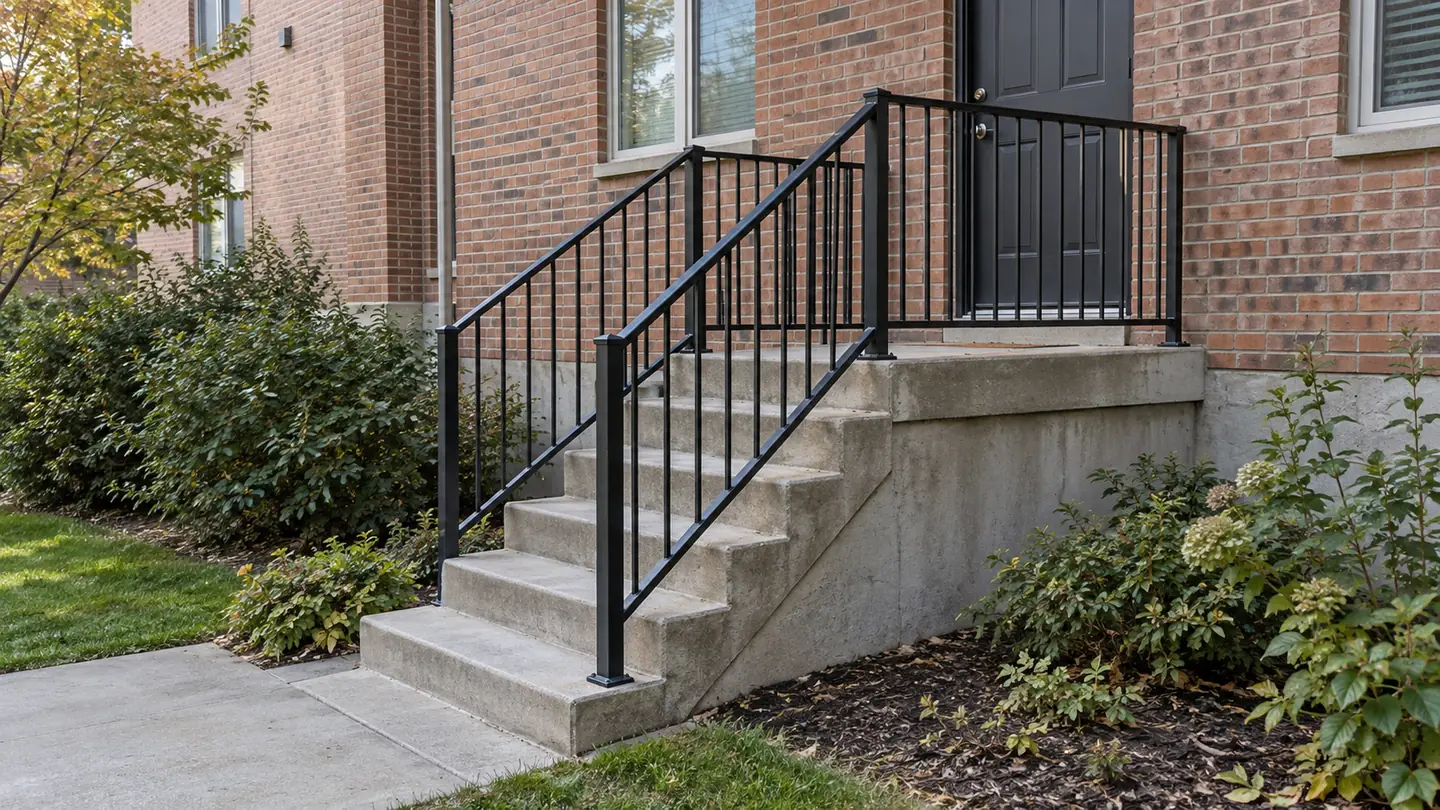
A loose handrail or broken step may have been reported long before someone fell. The legal question is more specific than whether the property needed work: which condition contributed to the fall, who was responsible for that part of the property, and what opportunity did that party have to correct it?
A repair history can connect the questions
Hypothetical example—not an actual case: A tenant reports that the handrail on a shared apartment stairway moves when grasped. Management acknowledges the message. Later, the tenant falls and says the same rail moved as they tried to steady themselves.
- Before the fall: The original request identifies the rail, the date and the recipient. Attached photographs may show the reported condition.
- Between the report and the fall: Replies, inspection notes and work orders may show what management checked or repaired. An acknowledgment alone does not establish that the rail was repaired.
- At the fall: The tenant’s account, witnesses and images help establish what happened and whether the rail contributed.
- Afterward: Medical records document the injury. Photos and repair records may help track changes to the stairway.
Each event needs evidence. This sequence does not establish a required repair deadline, prove who controlled the stairs or decide liability. It shows why the original complaint and the account of the fall should be reviewed together.
Start with who controlled the stairway
An interior staircase inside a rented unit, a shared exterior flight and steps beside a private entrance do not necessarily present the same legal duties. The lease is relevant, but so are the property’s layout, the right to use the stairs and the way maintenance was actually handled.
Save your lease, amendments, move-in condition report and community rules. Identify the owner, management company, maintenance contact and any contractor who recently worked on the stairs. Ownership alone does not answer every responsibility question, and a maintenance employee’s presence does not establish the scope of that employee’s authority.
Useful facts include whether other residents used the same stairs, whether management controlled access, who handled prior repairs, and whether the stairway was needed to reach the leased space. Describe your status accurately: tenant, household member, guest, delivery worker or another visitor. A lawyer needs those facts before selecting the governing premises-liability rule.
Hypothetical stairway · not an actual property
Connect the condition to control, notice and the fall

- The conditionPhotograph the rail, steps, landing, lighting and surrounding route when safe.
- Control and repairsPreserve leases, work orders, maintenance responsibilities and contractor records.
- Notice and timingKeep dated complaints, responses, inspections and witness information.
Visibility is only part of the analysis. The legal duty can depend on who retained control and which landlord-tenant rules apply.
Schematic only. It does not show a defect at a real property, establish code requirements or decide fault. A known or visible condition and contributory-negligence questions still need fact-specific review.
Source basis: Ex parte Housing Authority of the City of Talladega, SC-2023-0537 · Alabama Code § 35-9A-204 · Alabama Code § 35-9A-102
What do repair requests actually prove?
A dated message can show that someone reported a particular problem to a particular recipient. It is stronger when it identifies the exact staircase, the defect and the response. A message that says only “the stairs are bad” may leave questions about location or what needed repair.
Swipe or scroll horizontally to read the full table.
| Record | Keep these details | Question it helps answer |
|---|---|---|
| Maintenance request | Full text, date, ticket number, attached images and recipient. | What was reported, when and to whom? |
| Management response | Acknowledgment, inspection appointment, closure message and repair explanation. | What response or inspection followed? |
| Earlier photographs | Original files and the date and location they show. | How long may the condition have existed? |
| Prior incidents or witnesses | Names, contact details and what each person personally observed. | Was there earlier knowledge of the same condition? |
| Lease and maintenance history | Applicable terms, work orders and contractor information. | Who retained control or undertook repairs? |
An unanswered complaint is not automatic proof of liability. Nor does the absence of your own written request necessarily resolve the claim. Depending on the applicable duty, inspections, the condition’s duration and other reports may bear on whether the responsible party knew or reasonably should have discovered the danger.
Save full message threads and original files. If you reported the problem in person or by telephone, make an accurate note of when, to whom and what was said. Do not backdate a new note or present an estimate as an exact date.
Does knowing about the danger prevent a claim?
Not automatically. A landlord may retain responsibility for parts of the property that tenants use with their rented space, such as a qualifying shared stairway. Certain retained-area duties can require reasonable care even when the tenant can see the danger. Whether those duties apply depends on the area’s use and control; they do not cover every staircase.
The Alabama Supreme Court’s decision in Ex parte Housing Authority of the City of Talladega preserves these specific landlord rules, reflected in Restatement §§ 360 and 361, for retained areas used with the leased property or necessary to its safe use. They are distinct from general invitee rules for open and obvious hazards. The decision did not establish that the exceptions applied to the disputed stairs or award damages.
Your knowledge and conduct still matter. Alabama’s contributory-negligence defense can bar a negligence recovery when its requirements are met. Be candid about prior use, warnings, available routes and what you were doing. A repair request may help show that management knew about a condition while also showing that you knew about it. Both facts need assessment.
Connect the handrail or step to how you fell
Photographs should show the whole flight as well as the specific defect: the landing, step edges, rail attachments, lighting, surface condition and direction of travel. Explain whether a rail moved when grasped, a step shifted, a tread broke, or another condition affected your footing. The existence of a defect and its role in the injury are separate questions.
Do not test an unstable rail or return to an unsafe stairway just to gather evidence. A qualified inspection may be needed to assess dimensions, construction or code compliance. The applicable Birmingham code edition, building history and any alteration can matter; a photograph alone does not establish a particular code violation.
If the property is in a neighboring municipality, record that location accurately. A Birmingham mailing address does not by itself establish which local building rules apply.
How do Alabama’s rental-maintenance rules fit?
Alabama Code § 35-9A-204 sets residential landlord obligations concerning applicable health-and-safety codes, habitability and safe common areas. But the Act expressly says in § 35-9A-102(c) that it does not create tort duties or tort causes of action.
A request to repair the rental property and a claim for personal-injury damages therefore need their own legal foundations. Do not assume that a maintenance obligation automatically proves an injury case, or change rent payments or lease arrangements based on this injury guide.
What should you keep after the fall?
Get needed medical care and describe the mechanism of the fall accurately. Keep the incident report, medical records, bills, work restrictions, receipts and photographs of injuries. Ask for a copy of any report you sign and correct inaccurate details before signing when possible.
Preserve the clothing and footwear involved and identify witnesses or cameras. Record the condition as observed before and after the event without moving, repairing or removing parts yourself. If the stairs later change, note when you first saw the change; its legal significance requires separate evaluation.
Alabama’s general personal-injury filing period is two years, subject to the rules governing the actual claim. A claim involving a public housing entity or another government party may raise additional notice or immunity issues. Do not wait for management or an insurer to finish reviewing a complaint before getting the timing checked.
Bring the repair history you have
You do not need to prove the entire case before speaking with a lawyer. Start with the address, exact stairway, date of injury, lease, photographs, messages and medical information available. Bodewell’s Birmingham premises-liability practice includes injuries at apartment complexes. The team can assess the responsibility questions and what further records may be needed. Request a review of your Birmingham apartment-stair injury.
Sources and further reading
Opening image: AI-generated illustration of a generic scene, not a Bodewell client, actual case or identified location.
General information only: This page is not legal advice and does not create an attorney-client relationship. Deadlines, damages, defendants, and state-law rules depend on the facts. Read our full disclaimer before sending information.
No representation is made that the quality of legal services to be performed is greater than the quality of legal services performed by other lawyers.