
FQHC Medical Malpractice Claims Under the FTCA
Community Health Center Malpractice Guide
An FQHC medical malpractice claim can look like an ordinary case against a local clinic until federal coverage changes the defendant, filing process, deadlines, and court. The first question is not simply whether the clinic calls itself a federally qualified health center. It is whether the health center and provider were legally covered for the specific care at issue.
Was Your Care Provided at a Federally Supported Health Center?
The clinic name, billing records, provider relationship, date of treatment, HRSA deeming status, and scope of services may determine whether an ordinary state malpractice claim becomes a Federal Tort Claims Act claim. Bodewell Injury Group can review those threshold facts before a filing deadline is missed.
Alabama: (205) 533-7878
Georgia: (706) 550-9000
What Is a Federally Qualified Health Center?
Federally qualified health centers are community-based providers that deliver primary and preventive care in medically underserved areas or to medically underserved populations. They may provide family medicine, pediatrics, obstetric care, dental services, behavioral health care, pharmacy support, laboratory services, and other care through clinics and satellite sites.
The term FQHC can describe more than one program status. Some organizations receive federal Health Center Program funding under section 330 of the Public Health Service Act. Others are designated as Health Center Program look-alikes, meaning they meet program requirements but do not receive Health Center Program grant funding.
That distinction matters because look-alike status does not provide FTCA medical malpractice coverage. A clinic’s website, Medicare billing status, sliding-fee program, or use of the FQHC label does not by itself establish that the United States is responsible for a malpractice claim.
The Controlling Question Is Deemed Status, Not the Sign Outside
A qualifying HRSA-funded health center may apply to be deemed an employee of the Public Health Service for purposes of medical malpractice coverage under 42 U.S.C. § 233. Deeming is not automatic or permanent. Health centers apply for coverage, HRSA evaluates the application, and the approved status applies for a specified period.
Coverage also depends on the person and conduct involved. Officers, governing board members, employees, certain individual contractors, and separately deemed volunteer health professionals may qualify when statutory and program requirements are satisfied. A corporate contractor, outside specialist, referral provider, or clinician working beyond the covered relationship may require a different analysis.
Why Would the Federal Government Defend a Local Doctor?
Congress created a federal malpractice-coverage structure for qualifying federally supported health centers. When the health center, provider, service, and conduct meet the statutory requirements, the covered entity or person is treated as a Public Health Service employee for the claim.
For covered medical, surgical, dental, or related functions performed within the applicable scope, the remedy against the United States is generally exclusive. A lawsuit filed against the clinic or clinician may be removed to federal court, and the United States may be substituted as the defendant after the federal coverage and scope requirements are established.
In qualifying circumstances, the Department of Justice defends the action. That does not mean every person who works at an FQHC is a federal employee for every purpose. It means federal law supplies a limited malpractice remedy when the specific requirements are met.
Seven Questions That Help Determine FTCA Coverage
Question 1
Which Legal Entity Provided the Care?
The clinic’s public name may differ from the entity shown on consent forms, billing records, employment documents, or the HRSA record.
Question 2
Was the Health Center Deemed?
HRSA deeming must be confirmed for the relevant calendar year and treatment date. Current status does not automatically prove past coverage.
Question 3
Was the Provider Covered?
Employee status, individual-contractor requirements, volunteer deeming, and the actual relationship to the center may control.
Question 4
Was the Service Covered?
The alleged negligence must involve a qualifying medical, surgical, dental, or related function rather than an unrelated act.
Question 5
Was It Within the Scope of Project?
The site, service, provider, and activity may need to fall within the health center’s HRSA-approved scope of project.
Question 6
Was It Within the Scope of Employment?
Even a covered person may act outside the duties or relationship protected by the federal program.
Question 7
Was the Clinic Only a Look-Alike?
Health Center Program look-alikes receive some FQHC benefits, but HRSA states that FTCA does not provide their malpractice coverage.
Coverage is fact-specific. The HRSA FTCA Search Tool, deeming documentation, medical records, billing records, corporate identity, provider relationship, and treatment location may all be relevant. A search result is an important starting point, not a substitute for reviewing the full facts.
How Is an FQHC Medical Malpractice Claim Different?
If FTCA coverage applies, the case follows a federal claim process even though the underlying standard of care and malpractice principles generally come from the law of the state where the treatment occurred.
| Issue | Ordinary Medical Malpractice Claim | Covered FQHC / FTCA Claim |
|---|---|---|
| Initial defendant | A clinician, practice, hospital, or other private party may be named under state law. | The United States is generally the proper defendant for covered conduct. |
| Required first filing | State pre-suit and court procedures may apply. | The claim generally must first be presented to the appropriate federal agency, commonly HHS. |
| Court | A qualifying case may proceed in state court. | After exhaustion, a covered case is generally filed in federal district court. |
| Decision maker | State procedure may permit a jury. | FTCA cases against the United States are tried to a federal judge without a jury. |
| Damages framework | State substantive law generally controls. | State substantive law still matters, but federal limits and FTCA procedures also apply. |
These differences make it risky to assume that a state-court complaint or ordinary insurer notice preserves an FTCA claim. The federal administrative requirement must be addressed on its own terms.
The Administrative Claim Comes Before the Lawsuit
A claimant generally cannot begin a covered FQHC malpractice case by suing the United States. The claim must first be presented to the appropriate federal agency. For federally supported health-center malpractice claims, that is generally the U.S. Department of Health and Human Services.
Standard Form 95 is commonly used. A qualifying presentment must give the agency written notice sufficient to investigate and demand a specific total amount of money, called a sum certain. Medical records, expert support, bills, wage evidence, prognosis, and other damages documentation may be needed to evaluate the claim, but attachments do not cure a missing claimant, signature, incident description, or sum certain.
For a field-by-field explanation, read How to File Standard Form 95 for an FTCA Claim. After presentment, the investigation and settlement process are covered in Bodewell’s guide to the FTCA administrative claim process.
Two Federal Time Rules Demand Immediate Attention
Presentment period
Generally Two Years After Accrual
An FTCA claim is generally barred unless the appropriate agency receives it within two years after the claim accrues. Medical-malpractice accrual can involve fact-specific questions about injury and discovery.
Post-denial period
Generally Six Months After Final Denial
If the agency sends a final denial, suit generally must be filed within six months after the denial notice is mailed. The letter and envelope should be preserved.
Do not calculate a personal deadline from this article. The treatment dates, accrual facts, claimant identity, agency receipt, amendment history, denial notice, reconsideration, minority, death, and other facts can affect the analysis.
What Must Be Proven in the Medical Malpractice Case?
Federal coverage changes the defendant and procedure. It does not eliminate the need to prove medical malpractice. The claimant generally must establish the applicable standard of care, a breach of that standard, a causal connection between the breach and the injury, and legally recoverable damages under the law of the state where the alleged negligence occurred.
- Standard of care: what a similarly situated provider should have done under the circumstances
- Breach: how the care allegedly departed from that standard
- Causation: why the departure probably caused or worsened the injury rather than merely occurring before it
- Damages: medical expense, lost income, disability, pain, future care, death-related losses, or other recoverable harm
- Expert support: qualified medical analysis where state law or the issues require expert testimony
Not every poor outcome is malpractice. A delayed recovery, known complication, or unsuccessful treatment may occur without negligence. The records, timeline, clinical decisions, informed-consent evidence, and medical opinions must be evaluated together.
Examples of Negligence at a Community Health Center
A covered claim may involve medical, surgical, dental, or related functions performed by qualifying personnel. Potential allegations can include:
- Failure to diagnose or delayed diagnosis of cancer, infection, stroke, heart disease, appendicitis, pregnancy complications, or another serious condition
- Medication errors, unsafe prescribing, failure to review allergies or interactions, or failure to act on abnormal laboratory results
- Failure to refer a patient for specialist care, imaging, emergency evaluation, surgery, or higher-level treatment
- Prenatal, obstetric, postpartum, pediatric, or newborn-care negligence
- Dental negligence, including extraction, infection, nerve injury, anesthesia, or delayed referral issues
- Failure to monitor chronic disease, communicate test results, schedule follow-up, or respond to worsening symptoms
- Inadequate supervision, credentialing, staffing, documentation, or care coordination when those failures caused patient harm
The federal-coverage analysis and the medical-merits analysis are separate. A provider can be covered by the FTCA even when no negligence occurred, and a negligent provider may fall outside FTCA coverage because the entity, relationship, service, or conduct did not qualify.
Evidence to Preserve After Suspected FQHC Malpractice
Coverage and malpractice proof may depend on records held by different organizations. The health center may use an outside laboratory, hospital, imaging company, pharmacy, specialist, or corporate contractor. Preserve records that identify both what happened and who was responsible for each part of the care.
Important Records and Information
- The complete health-center chart, including notes, orders, messages, referrals, results, medication records, consent forms, and audit information where available
- Hospital, specialist, laboratory, imaging, pharmacy, dental, rehabilitation, and subsequent-treatment records
- Bills, insurance explanations of benefits, patient-portal screenshots, appointment reminders, and documents showing the legal entity or site
- Names and roles of clinicians, nurses, contractors, interpreters, administrators, and other people involved
- A dated timeline of symptoms, appointments, calls, advice, test results, referrals, treatment, and changes in condition
- Wage records, disability information, out-of-pocket expenses, future-care recommendations, and evidence of daily-life impact
- Agency correspondence, claim submissions, proof of delivery, acknowledgements, requests for evidence, and denial notices
Do not alter portal records, annotate original medical documents, or rely on a partial patient summary when the complete chart may be available. Keep copies of each request and the records produced in response.
What Happens After HHS Receives the Claim?
HHS may review whether the administrative submission is sufficient, whether the entity and provider were covered, whether the alleged conduct occurred within the protected scope, and whether the evidence supports responsibility, causation, and damages. It may request records, expert information, employment or contractor documents, and other evidence.
The agency may settle, deny, continue investigating, or take no final action within the first six months. If no final disposition is made within six months after valid presentment, the claimant may have the option to treat the inaction as a denial and file suit. A claimant is not automatically required to sue on the first day after six months.
If the agency issues a final written denial, the six-month post-denial filing period generally applies. If a lawsuit follows, the United States is generally the defendant in a covered claim, and federal procedure governs the case while the substantive malpractice law of the relevant state remains important.
How Alabama and Georgia Law Still Matter
The FTCA makes the United States liable in qualifying circumstances according to the law of the place where the alleged act or omission occurred. That means Alabama or Georgia law may still govern the medical standard of care, causation, available damages, expert qualifications, and other substantive malpractice issues.
Federal and state requirements must therefore be analyzed together. A claimant may need to satisfy federal presentment and deadline rules while also developing the expert and medical proof required under state law. Whether a particular state pre-suit rule applies in federal court can be a legal issue of its own and should not be assumed from a general article.
For non-FQHC medical negligence, review Bodewell’s medical malpractice resource. For other injuries involving federal employees, see Injured by a Federal Employee? Understand Your Rights.
Common Mistakes in FQHC Malpractice Claims
- Assuming every FQHC is covered: look-alikes do not receive FTCA malpractice coverage, and deeming must be verified.
- Checking only today’s status: coverage must be evaluated for the date of the alleged malpractice.
- Assuming every clinician is covered: employment, contractor, volunteer, scope-of-employment, and scope-of-project facts matter.
- Filing only in state court: a state complaint does not replace timely federal administrative presentment.
- Sending notice to the clinic but not the federal agency: local notice may not satisfy the FTCA receipt requirement.
- Leaving the demand open-ended: the administrative claim generally needs a specific total sum certain.
- Waiting for the medical picture to become perfect: the presentment deadline can expire while treatment and prognosis continue to develop.
- Treating coverage as the merits: federal coverage does not itself prove negligence, causation, or damages.
Continue the FTCA Claim Guide
FQHC coverage is only one part of the federal claim. Use the companion guides for the next issue in the process:
- Standard Form 95: what administrative presentment requires and how a sum certain works
- The FTCA administrative phase: investigation, evidence requests, settlement, inaction, and denial
- VA medical malpractice: the distinct FTCA issues that arise from treatment provided through the Department of Veterans Affairs
Frequently Asked Questions About FQHC Medical Malpractice
Is every community health center protected by the FTCA?
No. A qualifying HRSA-funded health center must obtain deemed Public Health Service employee status, and the status must apply to the relevant period. Health Center Program look-alikes do not receive FTCA malpractice coverage.
How can I find out whether a clinic was deemed?
HRSA provides an FTCA Search Tool for deemed health centers. Historical status, the correct legal entity, provider relationship, treatment date, service, site, and scope still need review.
Does FTCA coverage apply to every doctor at a deemed health center?
Not automatically. Employees and certain individual contractors may qualify, while outside organizations, referral providers, corporate contractors, and other clinicians may require a different analysis. Volunteers generally require separate deeming.
Can a dentist at a health center be covered?
Potentially. The statute addresses medical, surgical, dental, and related functions. The health center, dentist, service, scope, and treatment date must all satisfy the applicable requirements.
Do I sue the doctor or the United States?
For covered conduct, the remedy against the United States is generally exclusive. A case filed against the provider or center may be removed and the United States substituted after the federal requirements are established. If coverage does not apply, other defendants or procedures may be appropriate.
Do I have to file Standard Form 95?
SF-95 is the standard form and is commonly used. The controlling issue is whether the appropriate federal agency timely receives a qualifying written claim with sufficient notice, a proper signature, and a specific sum certain.
How long does HHS have to decide the claim?
The agency may decide the claim before or after six months. If it has not made a final disposition within six months after valid presentment, the claimant may have the option to treat the inaction as a denial for purposes of filing suit.
Can an FQHC malpractice claim settle without a lawsuit?
Yes. HHS may investigate and resolve a qualifying administrative claim, subject to federal authority and approval requirements. No particular claimant is guaranteed an offer or settlement.
Can I recover punitive damages?
The FTCA generally does not allow punitive damages against the United States. Recoverable compensatory damages depend on the applicable state law, federal law, and proof in the specific case.
What if the clinic never told me it had federal protection?
Health centers are expected to inform patients of deemed status, but the absence or visibility of a notice does not answer every coverage or deadline question. Obtain the records and investigate the entity’s status promptly.
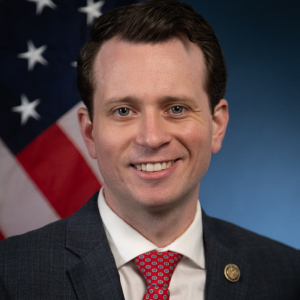
About the Author
Roger Grantham is an attorney at Bodewell Injury Group in Columbus, Georgia. His background includes federal litigation, defense-side practice, and high-stakes civil matters involving medical malpractice, wrongful death, motor vehicle collisions, and commercial disputes.
Learn more about Roger on his attorney profile.
Confirm the Defendant Before the Deadline
If you were harmed by possible medical negligence at a community health center in Alabama or Georgia, Bodewell can investigate the provider, entity, HRSA deeming status, medical evidence, and federal filing requirements that may control the claim.
Alabama: (205) 533-7878
Georgia: (706) 550-9000
Official Sources and Further Reading
- HRSA: FTCA Application Process and Deemed Health Center Search
- HRSA: FTCA Policies and Program Guidance
- HRSA: Health Center Program Look-Alikes and FTCA Coverage
- 42 U.S.C. § 233: Public Health Service and Deemed Health Center Coverage
- 28 C.F.R. Part 14: Administrative Claims Under the FTCA
- 28 U.S.C. § 2401: FTCA Presentment and Post-Denial Filing Periods
This article is general information only and is not legal advice. Reading it does not create an attorney-client relationship. Health-center deeming, provider coverage, scope of project, scope of employment, malpractice proof, administrative presentment, accrual, deadlines, damages, and litigation options depend on the specific facts and applicable federal and state law. Do not calculate a deadline from this article. Past results do not guarantee future outcomes.