
Frontover Accidents: Tall Trucks, SUVs & Pedestrian Blind Spots
Vehicle Safety Commentary
Large trucks and SUVs are creating a deadly visibility problem for pedestrians, cyclists, and especially children. These crashes are often called frontover accidents, and they can happen when a driver moves forward without seeing someone directly in front of the vehicle.
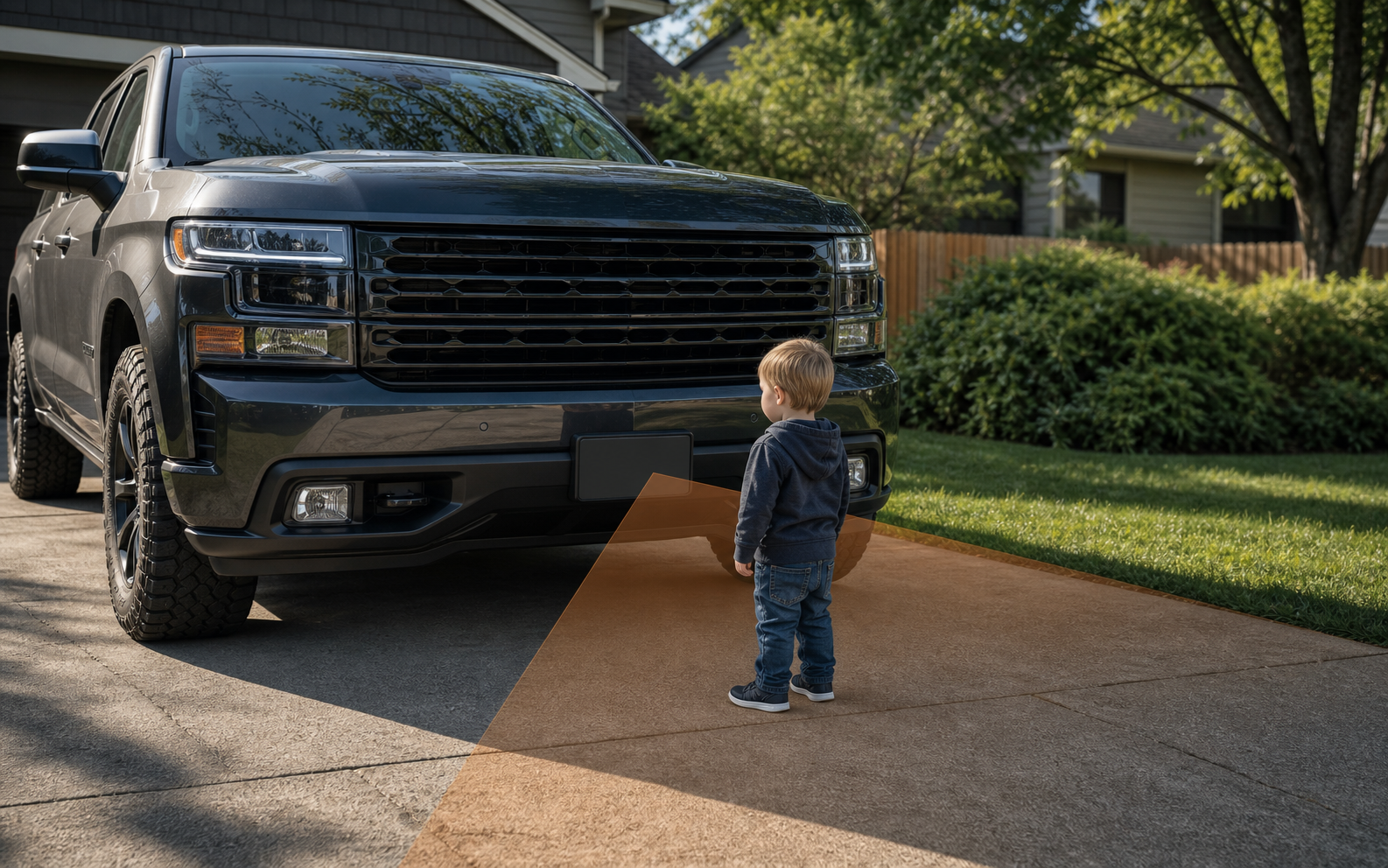
A recent investigation into rising vehicle hood heights has brought new attention to a dangerous trend: modern trucks and SUVs have become larger, taller, and more difficult to see around. According to reporting summarized by Car and Driver, research tied to a New York Times analysis found that taller vehicle hoods have contributed to thousands of preventable pedestrian deaths in recent years.
This issue is not only about bad driving. It is also about vehicle design, front blind spots, hood height, impact force, and whether manufacturers have done enough to protect people outside the vehicle. At Bodewell Injury Group, we are closely watching this trend because frontover crashes can raise both motor vehicle negligence and product liability questions.
Injured by a Truck, SUV, or Dangerous Vehicle Design?
If you or someone you love was hit by a truck, SUV, van, or other large vehicle, the driver may not be the only source of responsibility. The vehicle’s design, blind spots, warnings, and safety systems may also matter.
Alabama: (205) 533-7878
Georgia: (706) 550-9000
What Is a Frontover Accident?
A frontover accident happens when a driver moving forward strikes a person they cannot see because of a blind spot directly in front of the vehicle. These crashes may happen at low speeds in driveways, parking lots, neighborhoods, school zones, apartment complexes, or commercial properties.
The danger is simple but devastating: if a vehicle’s hood is tall enough, the driver may not see a child, pedestrian, cyclist, or wheelchair user standing directly in front of the bumper. The driver may believe the path is clear even when someone is in immediate danger.
Kids and Car Safety has long tracked frontover risks and published safety resources showing how large vehicles can create dangerous front blind zones. Those risks become even more serious as trucks and SUVs continue to grow taller.
Why Tall Hoods and Large SUVs Can Be So Dangerous
The design problem starts with height and visibility. Modern trucks and SUVs often have high, blunt front ends that can block the driver’s view of the space immediately in front of the vehicle. In some models, the front blind zone can extend many feet beyond the bumper.
That means a driver may not see a person until it is too late. For small children, the risk is especially severe because their height places them entirely inside the blind zone of many large vehicles.
Vehicle height also affects what happens during impact. Lower vehicles may strike a pedestrian’s legs and throw the person onto the hood. Taller, flatter-front vehicles are more likely to strike the upper body, push the person forward or down, and create a higher risk of the person being run over.
Why the Design Matters
- Taller hoods can hide pedestrians directly in front of a vehicle.
- Blunt front ends can make injuries worse by striking above the pedestrian’s center of gravity.
- Large front blind spots can delay reaction time, especially in driveways and parking lots.
- Children are uniquely vulnerable because they may be completely invisible from the driver’s seat.
Children Are Among the Most Vulnerable Frontover Victims
The most heartbreaking frontover cases often involve children. A child may follow a parent, grandparent, caregiver, or sibling into a driveway without being noticed. In a matter of seconds, a routine departure can become a catastrophic injury or fatal event.
Safety advocates sometimes describe this pattern as a child following an adult to say goodbye, then entering the vehicle’s blind zone. The driver may check mirrors, look forward, and still not see the child because the vehicle’s hood and front end block the view.
These cases are devastating because they often involve families, homes, and places where children should be safe. They also raise serious questions about whether vehicle design has kept pace with the known risk to children and other vulnerable road users.
Is a Frontover Accident a Product Liability Case?
It can be. A frontover crash may begin as a motor vehicle collision claim, but the facts may also support a product liability investigation. If the vehicle’s design created an unreasonable blind spot, increased the severity of impact, or lacked available safety features, the manufacturer’s decisions may need to be examined.
Product liability claims are fact-specific. The investigation may look at the vehicle’s hood height, front-end shape, camera systems, sensor technology, driver warnings, design alternatives, crash testing, marketing decisions, and what the manufacturer knew about pedestrian danger.
In some cases, responsibility may involve more than one party: the driver, the vehicle owner, a property owner, a commercial operator, an employer, a maintenance company, or the vehicle manufacturer.
Evidence That Can Matter in a Frontover Case
- Photos and video of the vehicle, scene, driveway, parking lot, lighting, and sight lines
- The vehicle’s make, model, year, trim, hood height, camera systems, and safety features
- Surveillance video, dashcam footage, doorbell camera footage, or nearby business video
- Witness statements from family members, neighbors, employees, or bystanders
- Medical records, EMS records, crash reports, and injury documentation
- Vehicle design materials, recalls, warnings, owner manuals, and prior incident history
What to Do After a Frontover Injury
After a serious frontover crash, families may be overwhelmed by medical treatment, grief, insurance calls, and uncertainty about what happened. But the early evidence can be critical. Vehicles may be repaired or sold. Surveillance footage may be overwritten. Driveway or parking-lot conditions may change. Witness memories may fade.
If you suspect the vehicle’s size, hood height, blind spot, or safety technology played a role, it is important to preserve the vehicle and document the scene as soon as possible.
- Do not rely only on the police report. Frontover cases often require independent investigation.
- Preserve the vehicle if possible. Do not repair, sell, or alter it before legal review.
- Save all video evidence quickly. Home, business, and parking-lot footage can disappear fast.
- Photograph the sight lines. Document what the driver could and could not see from the driver’s seat.
- Get medical care and keep records. Injury documentation matters in any serious claim.
How Bodewell Investigates Frontover and Vehicle Design Cases
Bodewell Injury Group handles serious injury, wrongful death, motor vehicle, and product liability cases across Alabama and Georgia. Frontover accidents can involve all of those areas at once.
These cases require more than a basic insurance claim. They may require vehicle inspection, scene reconstruction, expert analysis, product-design review, human-factors analysis, medical proof, and careful investigation into every party that may share responsibility.
Our team works to identify how the crash happened, what could have prevented it, and whether dangerous design decisions contributed to the harm.
Related resources:
Key Takeaways About Frontover Accidents
- Frontover accidents happen when a driver moving forward cannot see someone directly in front of the vehicle.
- Large trucks, SUVs, and vans can create dangerous front blind zones, especially for children.
- Tall, blunt vehicle fronts can increase injury severity by pushing pedestrians down or forward.
- These cases may involve both driver negligence and product liability issues.
- Early evidence preservation is critical, including vehicle inspection, video footage, and scene documentation.
About the Author
Roger Grantham is a Columbus, Georgia attorney at Bodewell Injury Group whose background includes federal litigation, defense-side practice, and high-stakes civil cases involving medical malpractice, wrongful death, motor vehicle collisions, and commercial disputes.
Learn more about Roger on his attorney profile.
Talk to Bodewell After a Frontover Accident
If you or your child was struck by a truck, SUV, van, or another large vehicle, Bodewell can help evaluate whether driver negligence, unsafe property conditions, or dangerous vehicle design contributed to the injury.
Alabama: (205) 533-7878
Georgia: (706) 550-9000
Sources and Further Reading
This article is general information only and is not legal advice. Reading it does not create an attorney-client relationship. Every case depends on its own facts, evidence, law, deadlines, venue, and available defendants. Past results do not guarantee future outcomes.